Ants are one of the most common household interlopers, usually in kitchens and bathrooms, but it’s difficult to get rid of them if you don’t know where they’re coming from. Fortunately, there are a few easy ways to make your home less attractive to these invaders, and some common locations where the majority of ant colonies can be found.
Ants are highly organized with industrious habits. These social insects live in colonies, led by a queen, and work together in a coordinated fashion. Ants are attracted to food sources, and their keen sense of smell allows them to detect even the tiniest crumbs. They leave pheromone trails to communicate with fellow colony members, creating well-defined pathways to food and water. Ants are persistent and can squeeze through tiny openings, making it challenging to keep them out. Understanding their habits is crucial for effective ant control. By addressing factors that attract ants, sealing entry points, and disrupting their pheromone trails, you can successfully prevent these determined insects from infiltrating your home.
Ants come in a variety of species, but generally, they share common characteristics. These insects typically measure between 1/16 to 1 inch in length, with worker ants being smaller than the queen. Their bodies are divided into three segments: head, thorax, and abdomen, featuring six legs and elbowed antennae. Ants exhibit diverse colors, ranging from black and brown to red and yellow, depending on the species. Some may have a combination of these hues. While most ants do not pose a direct threat through biting, certain species, such as fire ants, can deliver painful stings. Understanding the physical attributes of ants aids in identifying potential entry points and adopting targeted preventive measures to keep these industrious insects from invading your home.
Tracking Ants
In order to be able to track the source of an ant problem, it’s important to first note the season. During periods of warm weather, ants are actively foraging and exploring, finding and returning with new sources of food and water. Between late spring and late autumn, there’s a great deal more food outside than in, so ants in the home are often following a single scout that happened across a large amount of food or a significant water source. When a scout finds something of value, they return to the colony, leaving behind a trail of pheromones to guide foraging ants back to the source. Once the temperature begins to fall, exterior food sources begin to dwindle and water sources dry up or freeze, pushing ants to search for shelter.
If ants are found inside during the winter months, it’s usually due to one of two things. Either the ant colony is close enough to the home and deep enough underground to retain the warmth needed to continue foraging, or the colony has moved inside for protection. Any colonies away from homes or other structures, with no access to an independent heat source, will at this point typically enter a light form of hibernation called diapause. They’ll remain mostly dormant in their nests, using up their stored food and slowing or stopping egg production, until the days begin to lengthen and temperatures rise.
Warm Weather Ant Issues
The simplest way to reduce the chance of ants popping up inside is to remove potential food sources. Some ant species are primarily sugar feeders, preferring crumbs or spills high in carbohydrates. Others prefer proteins as their primary food source, mostly seeking meat or other insects to return to the colony. When ants start to appear in kitchens or pantries, it’s important to remove any crumbs, spills, or foods in accessible packages, and to wipe down the areas of activity to remove pheromone trails. Not only does this make the area less attractive to future scouts, it also makes pesticidal bait more effective. Keeping stored food items in airtight containers is a good general practice that can help limit ant and pantry pest issues.
When ants are found inside during the summer, activity is often first seen around an exterior wall. In the majority of these situations, a scout has found a path over the foundation, through the interior building materials, and has left behind a trail for other ants to follow. A close inspection around the base of that wall typically reveals a line of foragers traveling up and over the foundation, giving us a clear idea of the entry point and the location of the colony. Given the difficulties in sealing every single ant-sized gap around the foundation, professional pest control is typically the best approach at this point.
Cold Weather Ant Issues
When temperatures have consistently dropped below 40-50°F during daylight hours, most ant pest species will greatly reduce or stop their foraging activities. If they discover a humid, warm, and protected space, the colony may split or move in its entirety in order to take advantage. When that happens, ants don’t experience the low temperatures necessary to enter diapause, and can remain active throughout the cold season.
If temperatures have dropped below freezing, it’s almost a guarantee that any ant activity is coming from inside the home. Odorous house ants, one of the most widespread ant species in North America and one of the most common ant pests, follow a consistent pattern when entering homes. Most issues start in the basement or crawlspace, and most of these colonies can be found relatively quickly with a thorough inspection. Starting directly beneath the room in which activity is occurring, walking around the basement or crawlspace with a flashlight will typically reveal the colony’s frass, or garbage pile. Indicated by the presence of dead ants on the floor, the colony is typically located somewhere directly above this frass pile, often between joists or behind insulation. Once the colony is exposed, direct treatment becomes possible.
How to Manage Ant Issues
Contacting a trained and licensed pest control professional is typically the best approach to interior ant issues. While colonies in the yard can often be treated relatively easily, ant colonies have a frustrating tendency to split and move to new locations when confronted with a new danger. If an interior ant issue is treated with an over-the-counter repellent product without knocking out the entire colony, there’s a strong possibility that they will begin producing and rearing new queens in order to split, in a process known as budding.
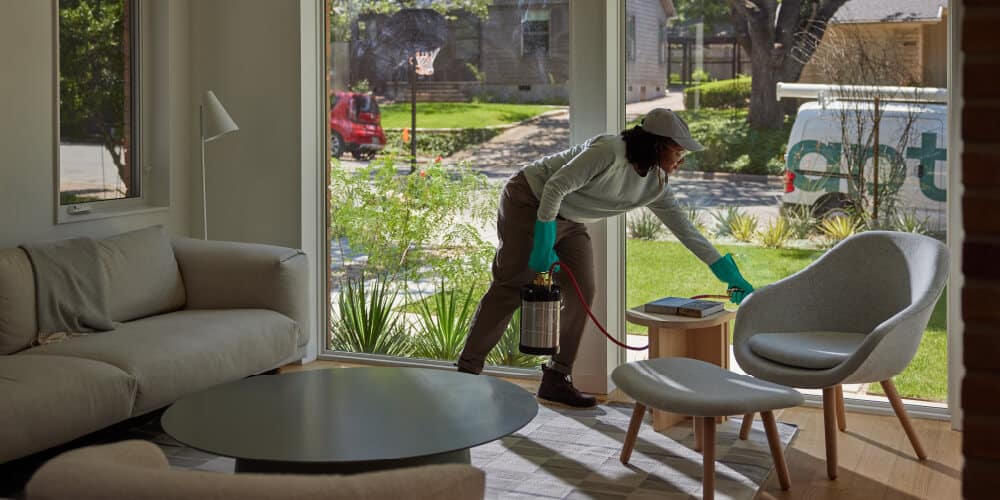
In order to limit budding from occurring in the first place, pest control professionals will typically perform an inspection to determine the source, treat the colony, and surrounding areas directly wherever possible, and place some form of bait in the areas where foraging ants are seen. It’s usually recommended that homeowners leave foraging ants alone for several days after baits are placed, as ant baits rely on individual ants returning to the colony to spread the pesticide. If the colony can’t be located for a direct treatment, baits and transferable non-repellent pesticides, coupled with any necessary removal of crumbs or spills, are the best strategy for control. A professional will often recommend another inspection within 1-2 weeks, to check bait placements and activity levels. Some ant species can be extremely difficult to control, and will require multiple treatments.
Controlling Interior Ant Activity
Given the impracticality of trying to seal every ant-sized hole around the base of a home, ant control starts in the yard. Consistent inspections of the area around a structure, along with regular treatments from a licensed pesticide business, helps deter nests from forming close enough to structures to become a problem. This won’t prevent 100% of all ant issues, as ant queens can fly over a pesticide barrier to a new nesting site, but it will greatly reduce the chances of ant issues developing inside or out. Applying a long-lasting granular product to the yard adds another layer of protection, in case a nest forms in an area outside of the normal foundation barrier.
In addition to pest control solutions, keeping lawns mowed and trimming branches away from homes and garages helps reduce issues from a range of pests. Reducing easily-available food sources such as leaky trash bags and minimizing water leaks or puddles are also beneficial in limiting ant issues.
Conclusion
Keeping ants at bay requires a proactive approach and a combination of preventive measures. By maintaining a clean and tidy living space, sealing entry points, and employing natural deterrents, you can effectively ward off these pesky invaders. Regular inspections and swift action are crucial in the fight against ant infestations. Remember, a partnership with a reliable pest control company can provide expert guidance and targeted solutions to ensure a home protected from unwanted insect guests. With diligence and the right strategies, you can enjoy a pest-protected living environment and defend your home from potential ant invasions.